Biophilic design is rarely integrated into high-end biohacking facilities today because the two movements evolved from opposing architectural and operational philosophies: biohacking prioritizes sterile, clinical precision and extreme environmental control, while biophilia relies on organic, living systems that introduce biological variables. However, merging these two worlds into "biophilic longevity" is widely projected by hospitality analysts to become the defining standard of luxury wellness over the next two decades, heading toward 2044.
Why Biophilic Design and Biohacking Currently Clash
The disconnect between natural design and high-tech wellness in luxury hotels stems from several practical, financial, and aesthetic friction points:
Clinical vs. Organic Aesthetics: Biohacking emerged from Silicon Valley tech culture and sports medicine. Facilities featuring cryotherapy chambers, hyperbaric oxygen pods, IV drips, and red-light beds naturally default to a futuristic, laboratory-like aesthetic (brushed steel, stark white surfaces, glass, and LED accents) to signal medical credibility and hygiene.
Strict Environmental Control: Biohacking equipment requires exact, unyielding parameters—sub-zero temperatures, hermetically sealed pressurized chambers, sterile air filtration, and specific light wavelengths (such as pure 660nm red light or total darkness). Living plants, natural soil, water features, and uncontrolled daylight introduce humidity, spores, allergens, and fluctuating temperatures that can interfere with sensitive medical-grade hardware.
Retrofitting Urban Luxury: Many high-end hospitality biohacking clubs (such as those in Manhattan, London, or Dubai) are retrofitted into existing urban basements or high-rise floors. Installing structural skylights, living green walls, and natural cross-ventilation in sealed skyscrapers is architecturally complex and expensive.
Maintenance and Operational Risk: In ultra-luxury hospitality, visual perfection is non-negotiable. Living walls and indoor ecosystems require specialized horticultural maintenance; a single dying plant or algae-clouded water feature undermines the high-trust, high-ticket promise of a $1,000-per-session longevity clinic.
Is "Biophilic Biohacking" the Future for 2044?
Yes—the convergence of high-tech longevity science and deep nature immersion is the primary trajectory for luxury hospitality. Industry forecasts show the global wellness real estate and longevity economy surging past $1 trillion, and guests are already pushing back against facilities that feel too much like sterile hospitals.
By 2044, this integration will likely look like invisible technology embedded within living architecture:
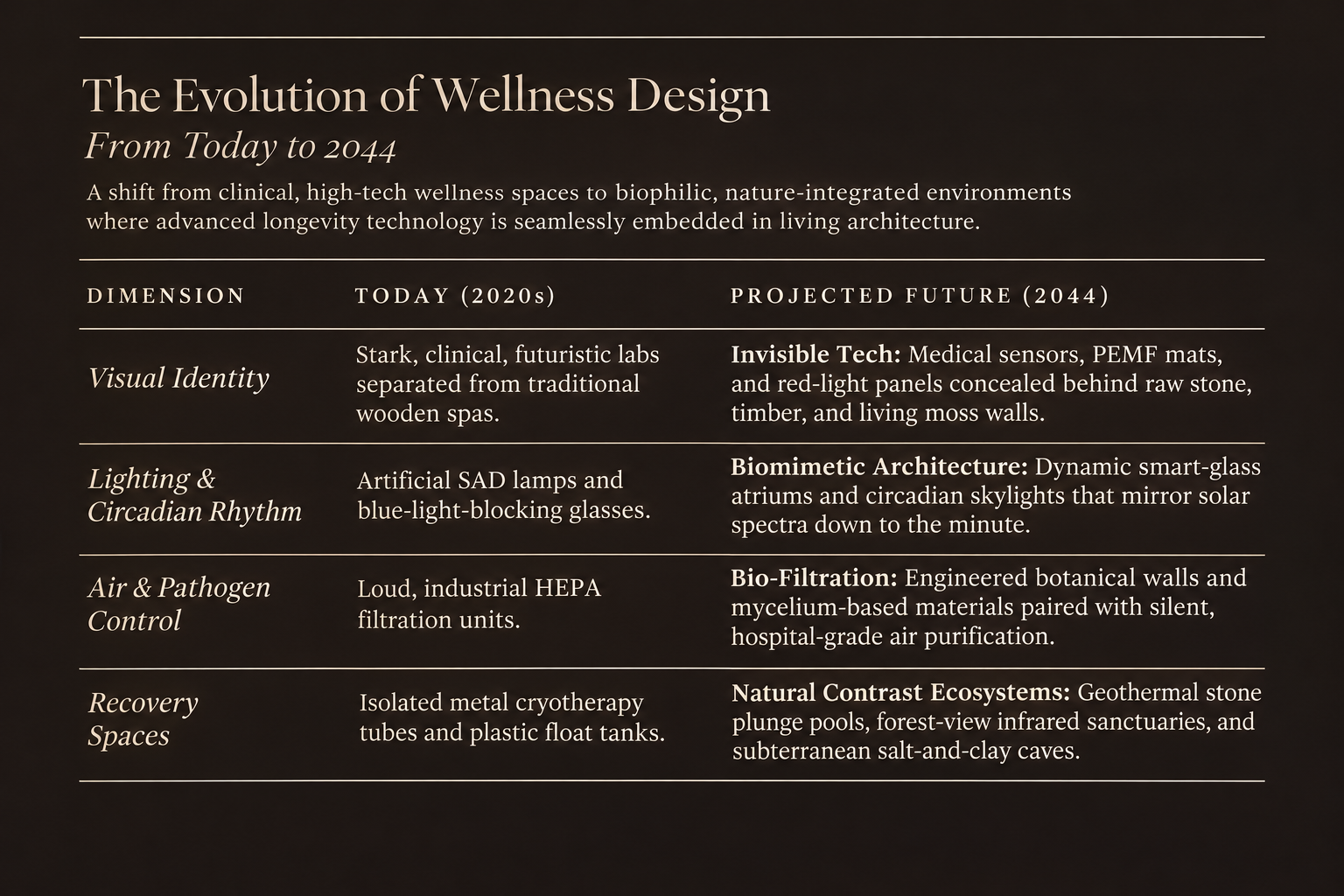
Pioneering hospitality brands—such as Six Senses and Equinox Hotels—are already laying the groundwork by pairing biometric diagnostics and sleep engineering with natural materials and circadian design. Over the next 18 years, luxury hospitality will increasingly treat nature not as mere decoration, but as the foundational biological technology upon which all clinical biohacking sits.
Article 1 takes an analytical, architectural look at why the luxury wellness industry is currently stuck in a sterile "clinical trap," while Article 2 projects forward to 2044, outlining the design blueprint for the next era of ultra-luxury longevity hospitality.
